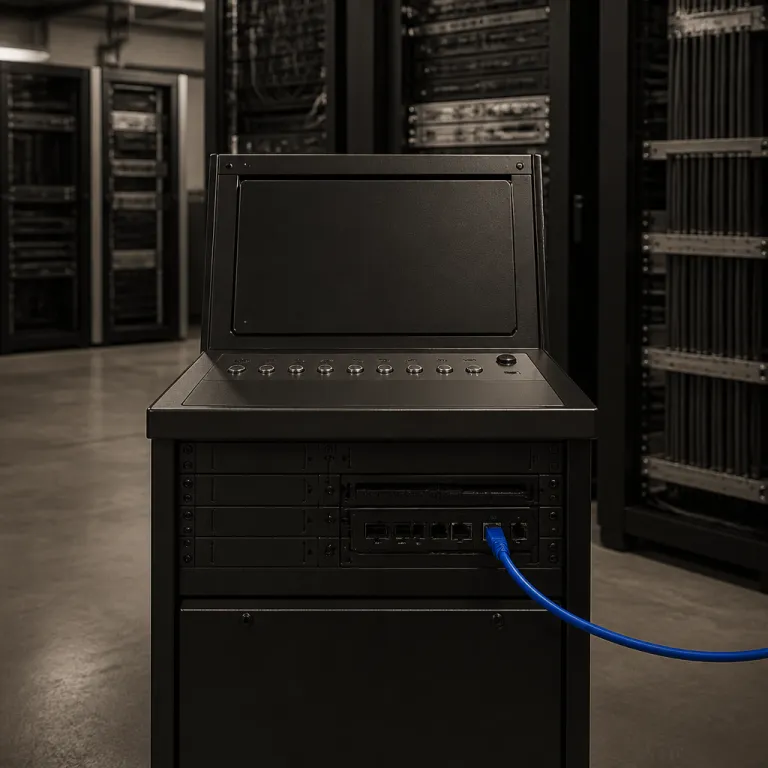
From fragmented tools to a true central management console
DevOps teams are moving away from scattered dashboards toward a single central management console. This shift reflects the need for a platform central enough to coordinate pipelines, environments, and management server operations across hybrid infrastructures. A well designed management console becomes the place where users, administrators, and security specialists can perform their daily tasks without context switching.
In many enterprises, the first generation of a central management approach came from analytics suites such as the SAP BusinessObjects platform, where the Central Management Console (CMC) unified administrative tasks for reports and business intelligence content. That heritage matters, because the same principles of central management, server management, and web based governance now apply to DevOps platforms that orchestrate microservices, APIs, and data pipelines. When you treat your DevOps toolchain as a businessobjects platform for software delivery, you start to demand the same level of intelligence, auditability, and user centric design.
Modern DevOps leaders expect a management console that can act as both a control plane and a knowledge hub. They want a console CMC experience where every management server, cluster, and environment is visible, searchable, and governed through a consistent privacy policy and security model. In this model, the central management console is not just a configuration screen, but a web based cockpit that helps teams perform complex tasks, allocate resources, and align platform SAP style governance with the pace of continuous delivery.
How a central management console reshapes DevOps governance
Governance in DevOps used to mean manual approvals and scattered spreadsheets, but a mature central management console changes that dynamic. By consolidating administrative tasks, server management, and user provisioning into one management console, organisations can enforce consistent policies without slowing down delivery. The result is a platform central enough to balance autonomy for users with strong administrative oversight.
Consider how SAP BusinessObjects uses the CMC web interface to manage reports, universes, and business intelligence content across multiple servers. The same pattern now appears in DevOps, where a web based console CMC style interface governs pipelines, environments, and secrets across Kubernetes clusters and cloud accounts. When teams log CMC style events for every change, they gain an auditable trail that supports compliance, incident response, and long term platform SAP governance.
For platform teams, the central management console becomes the primary tool to perform risk assessments, review access rights, and align with the organisation’s privacy policy. A typical role based access control model might define groups such as dev-readonly, ops-deployer, and platform-admin, each mapped to specific administrative tasks on the management server. This clarity is crucial when internal developer platforms risk turning into cost centres, as analysed in this piece on the IDP that became a cost center, because a strong console helps track usage, value, and accountability.
Security, privacy, and compliance inside the management console
Security and privacy cannot be bolted onto DevOps after the fact, so they must be embedded directly into the central management console. A robust management console treats every user, role, and token as a first class object, with clear mappings between users, groups, and the administrative tasks they can perform. This approach mirrors how SAP BusinessObjects and similar business intelligence suites manage access to sensitive reports and data.
In practice, a web based console CMC interface should expose fine grained controls for server management, encryption keys, and secrets rotation. It should also provide intelligence about failed logins, suspicious patterns, and misconfigured resources, turning the console into an early warning system rather than a passive dashboard. When teams log CMC style events for all security relevant actions, they create an auditable history that supports both internal reviews and external regulatory checks.
Privacy expectations are rising, which means the central management console must make the organisation’s privacy policy visible and actionable. That includes clear consent flows for users, transparent explanations of how logs and telemetry are used, and explicit statements such as “all rights reserved” where legal teams require them. DevOps leaders who align their platform SAP governance, business intelligence tooling, and management server controls around a single console reduce the risk of fragmented policies and shadow configurations, which are common root causes of breaches.
From monitoring to intelligence: turning console data into decisions
A central management console generates a constant stream of operational data, but value only appears when that data becomes intelligence. DevOps teams increasingly expect their management console to correlate events across servers, pipelines, and users, rather than just listing raw logs. This is where ideas from business intelligence and intelligence SAP tooling start to influence the design of DevOps platforms.
Vendors that grew up in analytics, such as SAP with the SAP BusinessObjects platform, have long used a Central Management Console to manage reports, schedules, and data sources. The same concepts now apply when a DevOps console CMC interface aggregates metrics from CI pipelines, deployment tools, and management server agents into a single business intelligence style view. When the platform central console highlights which administrative tasks consume the most time each day, leaders can reassign resources or automate repetitive work.
Teams that treat their central management console as a decision support layer, rather than a static dashboard, gain a competitive edge. They can perform “what if” analyses on capacity, simulate the impact of new services on server management, and align platform SAP investments with real usage patterns. For readers who want to go deeper into operational excellence, the guide on DevOps best practices and DORA recommendations pairs naturally with a strategy that elevates the management console into a true intelligence hub.
Integrating legacy platforms like SAP BusinessObjects into DevOps
Many organisations still rely on SAP BusinessObjects and similar suites, so their central management strategies must bridge old and new worlds. The Central Management Console in SAP BusinessObjects remains a critical tool to perform administrative tasks, manage users, and govern business intelligence content. Rather than treating this console as an isolated island, forward looking teams integrate it into a broader platform SAP and DevOps architecture.
One practical pattern is to expose key CMC web functions through APIs, then orchestrate them from a modern central management console that also controls CI or CD pipelines. In this model, the businessobjects platform and the DevOps platform share a common management server layer, unified logging, and consistent privacy policy enforcement. When users log CMC actions alongside deployment events, auditors can trace how changes to reports, data sources, or intelligence SAP models relate to application releases.
Another pattern is to use the management console as a web based hub for documentation, runbooks, and training around SAP Business and SAP BusinessObjects operations. This helps new users understand how business intelligence, server management, and platform central governance fit together in their day to day work. Over time, the same console CMC style interface can extend to other legacy platforms, reducing the number of separate tools that teams must learn and maintain.
Designing a future ready central management console for DevOps
Building a future ready central management console starts with a clear understanding of user journeys. Platform teams must map how different users, from developers to security engineers, perform their daily tasks across environments, servers, and tools. Those journeys then inform which features belong in the management console and which should remain in specialised interfaces.
A modern console CMC experience should be fully web based, responsive, and accessible from any device, while still respecting strict security and privacy requirements. It should integrate with identity providers, enforce role based access, and surface a transparent privacy policy so that users understand how their actions are logged and analysed. When teams design the console as a platform central to both self service and strong administrative oversight, they avoid the trap of either central bottlenecks or uncontrolled sprawl.
Migration to such a platform central console often coincides with broader cloud or hybrid transformations, which require careful planning and stakeholder alignment. Resources like the cloud migration checklist help organisations align infrastructure changes with updates to their management server and governance model. As DevOps matures, the central management console will increasingly act as the visible face of platform SAP strategy, business intelligence integration, and long term rights reserved style compliance commitments.
Key figures shaping the future of central management consoles
- According to the DORA research program from Google Cloud, the 2023 Accelerate State of DevOps report found that elite performers deploy code on demand and restore services in under an hour, and centralised visibility through a management console is a common enabler of that performance.
- Gartner’s 2022 research on platform engineering reported that organisations adopting internal developer platforms with a central management console can reduce developer cognitive load and improve productivity by double digit percentages compared with fragmented toolchains.
- Surveys from the Cloud Native Computing Foundation in 2022 show that a majority of Kubernetes users operate multiple clusters across environments, which increases the need for a platform central console to coordinate server management, security, and policy enforcement.
- Data protection regulators in regions such as the European Union continue to emphasise privacy by design in guidance around GDPR, which pushes organisations to embed clear privacy policy controls and audit trails directly into their web based management consoles.
FAQ about central management consoles in DevOps
How does a central management console benefit DevOps teams
A central management console gives DevOps teams a single place to manage users, environments, and administrative tasks across multiple tools and servers. This reduces context switching, improves visibility, and makes it easier to enforce consistent security and privacy policies. It also creates a shared source of truth for operations, audits, and incident response.
What is the relationship between SAP BusinessObjects CMC and DevOps consoles
The Central Management Console in SAP BusinessObjects was originally designed to manage business intelligence content, users, and servers. Many concepts from that CMC, such as role based access, scheduling, and centralised logging, now influence how DevOps management consoles are designed. Organisations that already use SAP BusinessObjects can often integrate its CMC with newer DevOps platforms to create a more unified governance model.
How should security and privacy be handled in a management console
Security and privacy should be built into the management console from the start, not added later. This means strong authentication, granular permissions, encrypted communications, and detailed logging of all administrative actions. The console should also make the organisation’s privacy policy visible and explain how user data, logs, and telemetry are stored and used.
Can a central management console help with multi cloud and hybrid environments
Yes, a central management console is particularly valuable in multi cloud and hybrid environments where resources are spread across several providers and data centres. It provides a unified view of servers, clusters, and services, along with consistent policies for access, security, and compliance. This reduces operational complexity and helps teams avoid configuration drift between environments.
What features should a future ready DevOps console include
A future ready DevOps console should be web based, API driven, and designed around clear user journeys. Key features include centralised access control, integrated observability, policy as code management, and support for both self service and administrative oversight. It should also expose analytics and business intelligence style insights so leaders can make informed decisions about capacity, risk, and platform investments.
